The School on the Rock: How HV Patil Vidyalaya Found Its Dignity Again
July 31, 2026
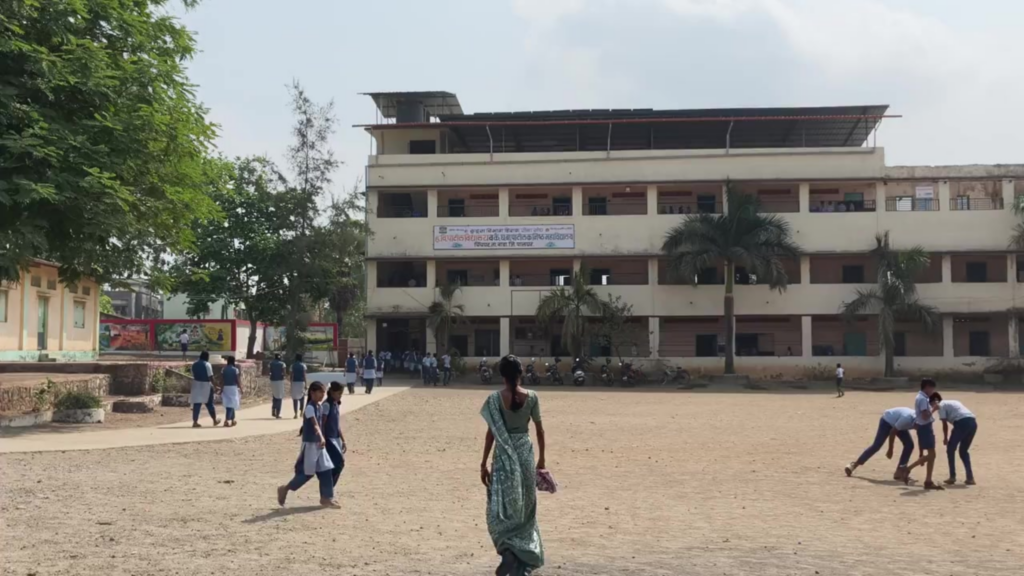
Locally, they call it Khadkavarchi Shala, the school on the rock. For years, that name carried a second meaning nobody intended. The rock wasn’t a foundation anymore. It was where you found crumbling classrooms, no drinking water, and toilets that didn’t work.
HV Patil Vidyalaya started in 1963 with 8 to 10 students crowded into a single eighth-grade classroom, in Wada taluka, Palghar district. Today it serves 2,000 students. But for a long stretch of years in between, that growth happened despite the building, not because of it.
The turning point came when Dipali Tai and Ram Dada from Seva Sahayog Foundation walked the campus. What they saw wasn’t just broken walls, it was 2,000 children whose potential was being held back by conditions no child should have to learn in. That visit, and the partnership with corporate collaborators that followed, set off a transformation that went well past patchwork repairs.
Rebuilding, Not Repairing
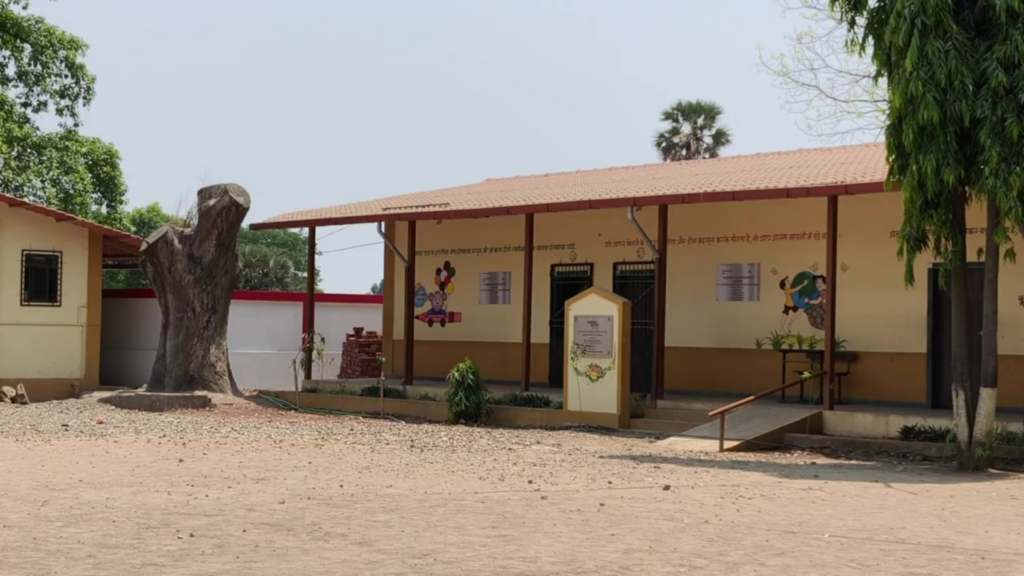
Four classrooms were beyond saving, dangerously close to collapse. Rather than patch them, the project demolished them and built three expansive new learning centers in their place. In total, 9 classrooms were reimagined: dark, cramped shells gave way to airy, well-lit rooms, new flooring, fans, proper lighting.
The project went further than walls, too. Solar power now keeps learning going without interruption, and a rainwater harvesting system feeds the school’s two borewells, practical answers to a school literally built on rock. It wasn’t just construction. It was giving teachers back their sense of professional purpose and giving every child who walks through the gate a sense that they matter.
What a Toilet Actually Means for a Girl’s Education
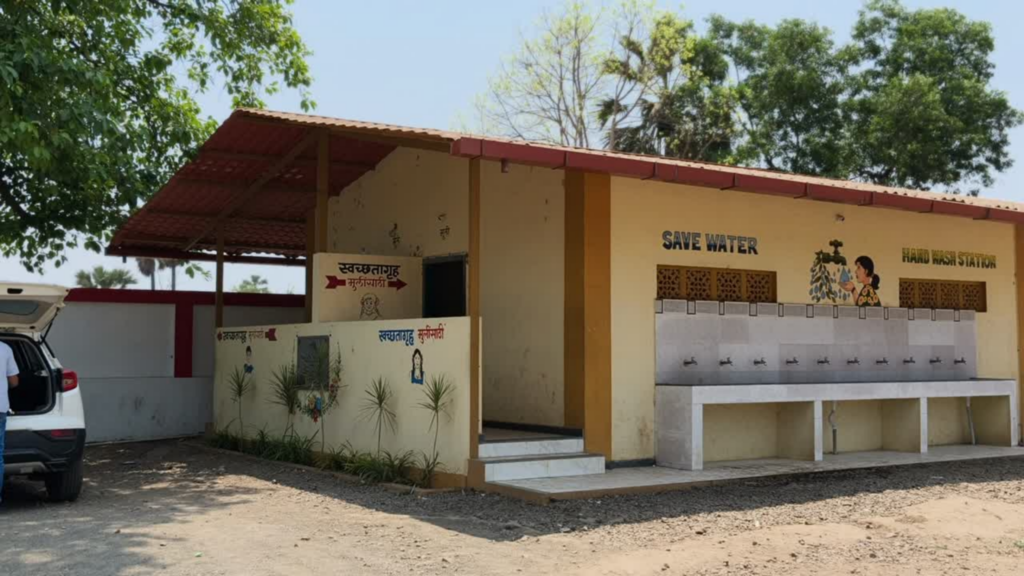
For many rural schoolgirls, the biggest obstacle to attending isn’t the curriculum. It’s whether there’s a safe, private place to be, especially during menstruation. Before this intervention, that absence turned attendance into something girls had to weigh and often avoid.
Separate, modern washrooms with reliable water and hygiene facilities changed that math entirely. As the students themselves put it:
“Girls used to find it very difficult to come to school during their menstrual period, but now that Seva Sahayog Foundation has provided separate toilets, washrooms, and water hygiene for girls, they find it very convenient and respectful.”
Digital Boards Are Only as Good as the Teacher Using Them
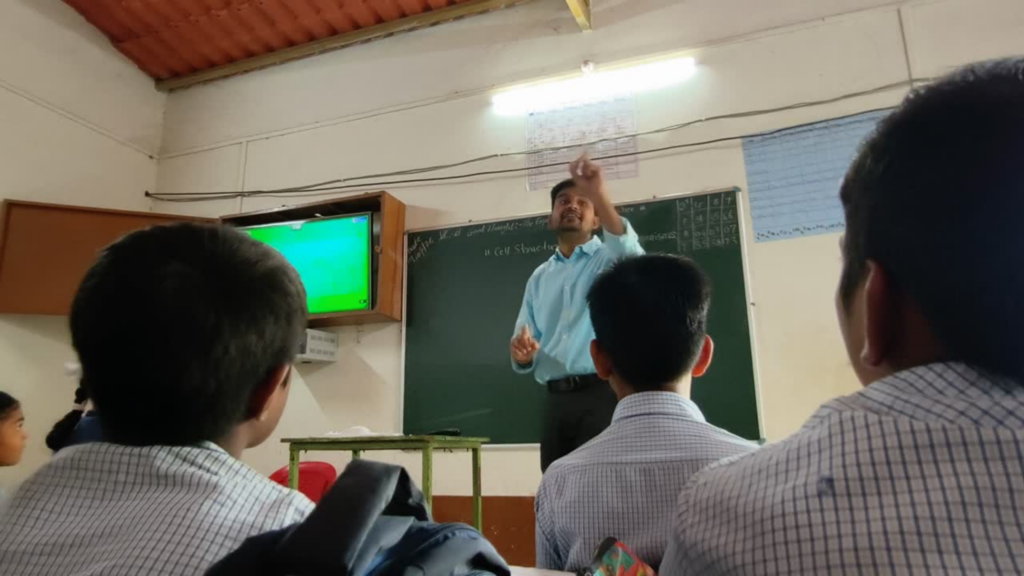
A digital board without a trained teacher is just an expensive screen. HV Patil Vidyalaya avoided that trap by pairing its new digital boards with real training for faculty, not just installing technology, but building the skill to use it well.
That shift changed what a lesson actually looks like. Instead of one-way lectures, classrooms became places of back-and-forth. Participation went up. Absenteeism went down. When students walk into a classroom built for real engagement, they show up ready to be part of it, not just present for it
Closing the Gap That Starts After the Bell Rings
For 9th and 10th graders in rural schools, there’s a resource gap that rarely gets talked about: many don’t receive government-issued textbooks at all. Learning stops the moment they leave school, simply because there’s nothing to study from at home.
Seva Sahayog provided 300 sets of textbooks specifically for these senior students, so their learning didn’t have to end at the school gate. New science lab equipment and sports gear rounded out the effort, making sure a student’s potential was never capped by what their family could afford.
Two Practice Exams, One Remarkable Result
Buildings give students a place to learn. What happens academically is a separate battle and one of the simplest, lowest-cost interventions here turned out to be among the most powerful: 2 standardized practice exams, introduced specifically to close the confidence gap that often separates rural students from their urban peers.
The results were hard to argue with. After these practice runs, the school’s overall success rate climbed by 8–9%. The science department went from a 96% success rate to a full 100%
A Blueprint Worth Repeating
What happened at HV Patil Vidyalaya isn’t just a good outcome for one school. It’s proof that “broken” systems are often simply under-resourced ones waiting for a partnership willing to invest in dignity as much as data.
A school once known for crumbling walls now has a science department with a 100% success rate. If that’s possible on a school built on rock, it’s worth asking what else becomes possible when rural students are finally given a real floor to stand on. Seva Sahayog Foundation remains committed to finding out.
#SevaSahayogFoundation #HVPatilVidyalaya #RuralEducation #EducationForAll #GirlsEducation #DigitalLearning #SocialImpact
YouTube Video Link:- https://youtu.be/A4cdglOb8IU?si=L-Zpb-7n1SRmN6PZ